Tuesday, March 26, 2013

When I wrote about unemployment

"Unemployment in Myanmar" was the first article that I was writing, in Burmese, for one of Burmese (Myanmar) journal. At the beginning it was my intention to make the article short that discusses about the current unemployment situation of Burma, together with statistics, and a little bit of theories on unemployment, and potential of Burmese economy in general and of job creation in particular, the barriers and challenges in Burma and finally some brief recommendations for solving unemployment problems of Myanmar.

I have collected, read and understood and written about most of these matters, except theoretical discussion. Initially I though theoretical session would be very brief. At the beginning, I planned to talk about just two theoretical concepts concerning unemployment, i.e., the famous and the most essential “Phillips curve”, and then the concept of NAIRU (NaturalRate of Unemployment). When discussing these two concepts, I chose five important economists; William Phillips, Paul Samuelson, Robert Solow, MiltonFriedman and Edmund Phelps. Phillips is the creator of the very famous concept “Phillips curve” in his historic but a bit short article[i], but it was not he who uses the term “Phillips curve”, but Samuelson and Solow who started naming “Phillips curve” in their influential article[ii]. It was Friedman and Phelps who repudiate “Phillips curve”. And it was Friedman who introduced a term “the Natural rate of unemployment” (Nairu). Hay, it is nothing to do with first Indian Prime Minister—the spellings are different, Prime Minister is spelled “Nehru”. Among these five giants of economics, four of them except Phillips won Nobel prizes. However, Phillips’ name became immortal in economic science and we always have to talk about his curve whenever we discuss or teach or learn economics and economies.
Paul Anthony Samuelson in 1950. LIFE magazine photo (December 1950). Image from http://www.lagunabeachbikini.com/wordpress/wp-content/images/2010/critical-thinking/paul-samuelson-1950.jpg
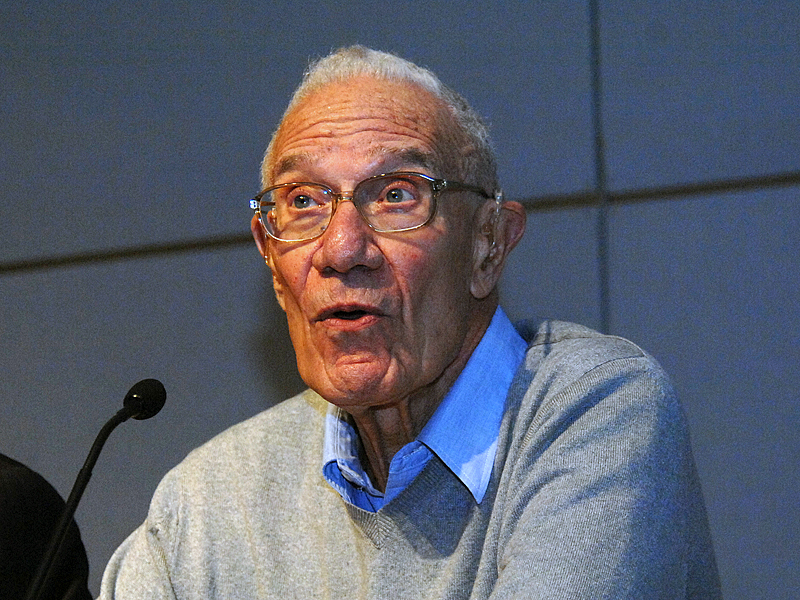
Robert M. Solow. Image from

Edmund S. Phelps, in 2006. Image from
 
 
Milton Friedman.
Photo Credit: Milton Glaser. Image from TIME Magazine, http://img.timeinc.net/time/magazine/archive/covers/1969/1101691219_400.jpg

Thus it would be, I thought, a short session of theoretical discussion. However, when I read, study and write about the discussion and argument of Friedman, I discovered that Keynes’ argument and theory should be briefly mentioned, and at the same time Classical theory of unemployment, as well as Say’s Law[iii], will also be necessary, at least very brief, to be discussed because these are the theoretical background on which all series of theoretical debates are based.

The simple point of Phillips curve is that there is a negative relationship between the unemployment rate and the price level. When the unemployment rate declines, the overall price level (i.e., inflation rate) rises. The fundamental principle of the classical theory is that the economy is self-regulating and is always capable of achieving the natural level of real GDP or output, which is obtained when the economy's resources are fully employed, in other words in a state of full-employment. Any unemployment in the country is assumed to be temporary or abnormal. Classical economists hold that the unemployment cannot be persisted for a long time, and there is always a tendency of full employment in the country.


Phillips curve. Source: Bureau of Labor Statistics.
Note: Inflation based on the Consumer Price Index.

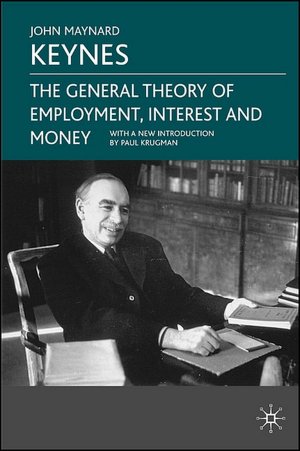
However, in his immortal book ‘General Theory of Employment, Interest and Money’ Keynes (1936) strongly criticises the classical theory and argues that, opposed to Say’s law, demand creates its own supply and the economy can stabilise at an equilibrium with unemployment, because of demand deficiency, in other words, a lack of aggregate expenditure. Thus it is called demand-side economics.

Book: Keynes (1965) The General Theory of Employment Interest and Money.

While talking about arguments of Friedman and Phelps, there was discussion about effects of wages on unemployment. Then I have to talk about, just a little bit again, wages, and then roles of unions, and labour market rigidity. If I am going to discuss about unions and its effects on unemployment, I cannot help but talk about, at least briefly again, Friedrich von Hayek who wrote, in 1981, a very influential book “1980s Unemployment and the Union”[iv].
  
 Book: Hayek, F. A. (1981) 1980s Unemployment and the Unions.


Friedrich von Hayek.

It is Hayek who holds that unions have a much better reputation than they deserve, and “it is probably… impossible in our time for a student to be a true friend of labour and to have the reputation of being one” (Hayek, 1967: 294). By the way, Hayek is also a winner of Noble prize for economics. Hayek (1981) argues that unions benefit some workers but it was always at the expense of other workers and that as a whole, unions have made workers significantly worse off than they would otherwise have been. When discussing about the affects of union on unemployment, it is necessary to discuss nature and practices of Japanese unions, which are in constructive and productive relationships with employers, i.e., companies and their management (Fujimura, 2012). Ohhh, I also want to talk about Schumpeter's view on unemployment (Schumpeter, 1942). But I will discuss about it in later longer articles.

Joseph Alois Schumpeter. Image from

Ohh, no. Now my theoretical session become its own article. And I have been wondering about the unemployment situation of SouthAfrica where I have been staying, unplanned and unexpectedly, and studying and then gradually falling in love not only with the country but also with a certain special daughter of it.

Unemployment in Myanmar was an article I was writing, at the beginning, but now I am start drafting an article on sources of high unemployment in South Africa.
Darling, now you know why I am so quiet and do not communicate or meet with you.


REFERENCES

Fujimura, H. (2012) In Japan’s Labor Unions: Past, Present, Future. In Japan Labor Review, vol. 9, no. 1, Winter 2012.
Hayek, F. A. (1959) Unions, Inflation and Profits. In Studies in Philosophy, Politics and Economics. Chicago: University of Chicago Press, 1967. pp. 280–294.
Keynes, J. M. (1936) The General Theory of Employment Interest and Money. London: Macmillan.
Schumpeter, J. A. (1942) Capitalism, socialism and democracy (5th Edition). London: Unwin.
Thweatt, W. O. (1978) Early formulators of Say’s law. In Quarterly Review of Economics and Business 19 (Winter 1978). pp. 79–96.


ENDNOTES

[i] Phillips A. W. (1958) The Relation between Unemployment and the Rate of Change of Money Wage Rates in the United Kingdom, 1861-1957. In Economica, New Series, Vol. 25, No. 100 (Nov., 1958), pp. 283-299. Retrieved on March 22, 2013 from http://www.jstor.org/stable/2550759

[ii] Samuelson, P. A. & Robert M. Solow, R. M. (1960) Analytical Aspects of Anti-Inflation Policy. In The American Economic Review, Vol. 50, No. 2, Papers and Proceedings of the Seventy-second Annual Meeting of the American Economic Association (May, 1960), pp. 177-194. Retrieved on March 16, 2013 from http://www.jstor.org/stable/1815021

[iii] In fact, its full name is Say’s law of markets, which is the foundation of classical economics, and argues that general overproduction is impossible and supply creates its own demand. Thus it is called supply-side economics. This idea was already discussed by Adam Smith and later John Stuart Mill. It was because of Keynes who attributes this law to Say, instead of to Smith and Mill. It is not by Keynes, it will be the Smith-Mill law (Thweatt, 1978).

[iv] Hayek, F. A. (1981) 1980s Unemployment and the Unions: Essays on the Impotent Rice Structure of Britain and Monopoly in the Labor Market (Hobart Paper No. 87). London: Institute of Economic Affairs.


NOTE

It is about reasons for talking too long to write an article; I just cannot write anything without discussing theoretical background. What a great academic I am!!! I hope I will be able to stop writing on unemployment until it became big enough to be an academic tome, which covers comprehensive theoretical debates, history of unemployment, and current situations and problems of unemployment in countries around the world. It will be my academic project for this year or next couple of years.

(25 March 2013, Monday, 10:12 pm)

Friday, August 24, 2012

A Tribute to Alan Saunders

 "To study philosophy is nothing but to prepare one's self to die."
Cicero (cited in Michel de Montaigne, 1575: Book 1, Chapter 19)

I am rarely impressed by entertainers, journalists, media personals. But Alan Saunders impressed me greatly. For me, he was not merely a journalist, or a radio presenter, but a philosopher, a teacher, an artist. We never met, but he is one of my great teachers.

I cherish, treasure, and collect his programme (Philosopher’s Zone podcast). I love and adore his discussions. I study and listen regularly repeatedly reverently.

I am never scared of death. And I am rarely moved by death of anyone. But his unexpected sudden death made me felt sad, lost, unhappy, a bit angry. He could easily produced many great, valuable works on philosophers and philsophy.

Dr Alan Saunders fell ill, while working on his program The Philosopher's Zone on Thursday afternoon (14th June 2012), and was taken to hospital where his condition deteriorated overnight. He died of pneumonia in hospital on Friday morning (15th June 2012) surrounded by colleagues and friends (ABC Radio, 2012). He was only 58.

There is a tribute program (Tribute to the Philosophical Alan Saunders) made for him. At this programme, philosopher Martha Nussbaum, from the University of Chicago, who was interviewed by Alan a number of times for the program said

"Alan Saunders was a prince among broadcasters. Of all the journalists I've ever met, he had the deepest love of, and also understanding of, philosophy, and his passion for ideas made doing a program with him a highlight of one's year -- even long distance by phone, and even more in person in the studio. What he brought to public discussion was priceless."


Alan Saunders attending the Food for Thought forum, National Portrait Gallery,
Canberra, 5 March 2005 (Loui Seselja; courtesy).


In A picture of Alan Saunders (in memoriam), W H Chong wrote
I can’t recall that he was ever pompous, or self-regarding — how rare! In that way he was a kind of bodhisattva, an already enlightened being who elected to stay on this plane to help others find their way. To make a weekly offering of possible meanings in our shattering, uncentred and materialistic time seems to me an act of faith, a work of unusual generosity of energy.

In In memoriam: Dr Alan Saunders, Amanda Armstrong, an acting station manager of ABC Radio National program, says Dr Saunders had an extraordinary mind.
“He was equally at home talking about Plato, the role of vampires in popular culture or the history of the restaurant. He wrote like an angel, and had a deep knowledge of music, among many other areas, including philosophy, gastronomy, architecture, design and film."

Andrewk, Inexhaustibly Curious, beautifully wrote "Death of Alan Saunders" at Philosopher Forums
"He had an open mind, a calm, genial demeanour, a pleasant voice and a keen curiosity about all things philosophical and scientific, as well as a number of other topics - he also broadcast shows on architecture, design and food. He was very good at explaining complex concepts in simple terms and he had an endearing habit of always interjecting when one of his guest philosophers mentioned a name in passing, such as "Ayer disagreed with this", to say "you mean the 20th century British philosopher AJ Ayer", for the benefit of his listeners. He was always focused on keeping the discussion intelligbile to his listeners."

I will take time and make efforts to write a proper blog about him.


Reference

ABC Radio (2012) ABC Radio philosopher Alan Saunders dies. ABC Radio online, Jun 16, 2012. Retrieved on August 24, 2012 from http://www.abc.net.au/news/2012-06-15/abc-radio-philosopher-alan-saunders-dies/4073618

Montaigne, M. D. (1575) Essays (translated by Charles Cotton, 1877). Retrieved on August 27, 2012 http://oregonstate.edu/instruct/phl302/texts/montaigne/montaigne-essays--5.html#XVII.


Links on Alan Saunders

Alan Saunders's Keynote Speech "Dare to Know"

His keynote address “Dare to Think” delivered at the VAPS (Victorian Association for Philosophy in Schools) Conference in June 2011.

ABC Radio philosopher Alan Saunders dies
In memoriam: Dr Alan Saunders, FAPSA 
Alan Saunders (broadcaster) (Wikipedia)
A picture of Alan Saunders (in memoriam)
A tale of two journalists: of Alan Saunders, Andrew Bolt and the contempt News Ltd publications has for people “like me”

Wednesday, June 13, 2012

Chicago School, JDR and Sultan of Rousseau

One of my beneficial habits is to wake up at about 3am every morning.  Ironically,it also makes difficult for me to be on time at early morning meetings or appointments. As usual, this morning I was awake at about 3:15 am. As usual, I do some thinking, a positive one, an inspiring one, a visionary one. Then, I took a book at hand, I place several books around my beds, it used to be even on my bed when I slept on a big bed. The book I read this early morning is Dale Carnegie’s very famous, informative, practical, well-researched and beautifully-written book How To Stop Worrying And Start Living (1958). The chapter I read was about John D. Rockefeller, one of the richest persons in the whole world (p.196 -199). I was so amused to know how stingy JDR was.

Among the books around my bed is a book about Rousseau. Reading, or even thinking, about Rousseau always makes me great laugh, amused throughout the whole day. Rousseau who was regards by many as a pain of the earth; a very, extermely, difficult person whose life was so colourful, but still very brilliant, a real genius at least in my view.

In another post, I will take about Rousseau and his beloved little dog named Sultan for whom we cancelled his appointment with the King (George III, who offered him a pension, which he badly needed, but refused), the appointment was arranged by our great Philosopher, David Hume. The reason for not going to the King was that there was no one to be with Sultan. It is important to note here is the point made by Rousseau, i.e., meeting with a king is no more important than staying with his beloved little dog, Sultan (remember 'Sultan' is an Arabic word that alsomeans ''strength,' 'authority,' 'rulership,' and 'dictatorship'.). 

Why am I talking about Rousseau while talking about JDR is their interesting personalities and their great contributions to us. JDR had done great contribution for us with his money (some called “tainted money”, for me it is still an honorable and appreciative active to do such things because it is better to be rich and do something goods for fellow humans than to be poor and therefore unable to do anything for fellow living beings. Moreover we all are liable to error but there are only very few of us who are able to learn from error and better themself), whilst Rousseau did through his philosophy (althogh I do not always agree with his philosophy especially 'social contract, general will, real will, actual will'). Let’s start with JDR.


JDR (John D. Rockefeller)

One of the most critical facts that caught my interest in JDR is about his way of life especially when he was young and mad for money, just money, only money. But in my case, I am mad with an accomplishments, academic accomplishments or intellectual break-through in particular. Like me, JDR did not had time for play or recreation, never went to the theatre, never played cards, never went to a party. But there are two differences between JDR and me, i.e., I still have very special recreation, which is meditation and visualisation exercise, and while JDR was mad about money, only money, just money (no doubt that he become the richest person on the whole earth-planet, I am mad about academic break-through (very much like René Descartes while he was so obsessive with philosophical discovery. I will talk about Descartes soon; he is also one of the most important persons we ever have in our whole civilisation). It is also one of the most powerful testaments for law of attraction: you are what you are always thinking, or you get what you madly want, or you become what you madly want to become).

JDR was so stingy and so crazy about money. Let’s read a story narrated by Dale Carnegie (1958: 196 -199) (most of the following are direct-quoted, I know I should have paraphrased but I think the original are so perfect. I did paraphrase some of them and put direct-quotation marks around the original sentences).

One day he shipped grain by way of the Great Lakes. Although the total worth of the grain was $40,000, JDR did not insured because it was too much for him; S150. On that night, a vicious storm raged over Lake Erie. Rockefeller was so mad with worries about losing his cargo. When his partner, George Gardner, arrived to the office in the morning, he found JDR pacing the floor.

George said "Let's see if we can take out insurance now, if it isn't too late!" and then rushed uptown and got the insurance.

“When George returned to the office, he found John D. in an even worse state of nerves because a telegram had arrived in the meantime: the cargo had landed, safe from the storm.  JDR was sicker than ever now because they had "wasted" the $150! In fact, he was so sick about it that he had to go home and take to his bed.”

Here another instance retold by Carnegie (1958: 196 -199). When George Gardner, JDR partner, “purchased a second-hand yacht, with three other men, for $2,000, John D. was aghast, refused to go out in it.

When Gardner found JDR working at the office one Saturday afternoon, he pleaded:
"Come on, John, let's go for a sail. It will do you good. Forget about business. Have a little fun."

Rockefeller glared. "George Gardner," he warned, "you are the most extravagant man I ever knew. You are injuring your credit at the banks-and my credit too. First thing you know, you'll be wrecking our business. No, I won't go on your yacht-I don't ever want to see it!" And he stayed plugging in the office all Saturday afternoon.

Although JDR was so mad and so crazy about money, he indeed changed and had done a lot of great contributions for the benefits of humanity. There are many souls who never change and still bad, selfish, cruel and cause great damages to humanity but there are also some great persons who once are greedy, cruel and selfish, but change later and become the best sons and daughters of the world.
JDR was one of them. “When he learned of a starving little college on the shores of Lake Michigan that was being foreclosed because of its mortgage” (Carnegie, 1958: 198). He came to its rescue and poured 80 millions of dollars into that college and turned a small Baptist college into the now world-famous University of Chicago (Byron, 1985: 457).


Chicago School

Why am I saying these things about JDR? It is mainly because of Chicago School, which is considered one of the world's foremost economics departments, has fielded more Sveriges Riksbank Prize in Economic Sciences in Memory of Alfred Nobel laureates and John Bates Clark medalists in economics than any other university. But we should remember that the process of selecting candidate for Noble awards is a peer-reviewd process, candidates are proposed, shortlisted and selected mostly by Nobel laurates. There is, therefore, an effect of a virtuous circle or a vicious circle in the case of having more Nobel laurates for economics in Chicago School.  

When we talk about Chicago School, it is also necessary to look at Shock Doctrine of  Naomi Klein. I will talk more about Chicago School, Milton Friedman (the most important person of Chicago School and one of the greatest antagonists of Keynescianism. But we should remember that Milton was Keynesian when he was young, as the same way like Haykes was socialist when he was young too), Keynesianism (which is rejected and opposed fervently by Chicago School) (I have already talked a little bit about Keynes and Hayeks), Noami Klein, Shock Doctrine later.

(I will talk about Rousseau and his beloved Sultan, who is, for Rousseau, as important as a King soon).


References:

Byron, D. (1985). A Sense of history: the best writing from the pages of American heritage. New York: American Heritage Press.
Carnegie, D. (1958) How To Stop Worrying And Start Living. Retrieved on June 13, 2011 on www.trans4mind.com/Carnagie.pdf


Thursday, May 24, 2012

What if Hayek died early and Keynes lived very long?

Hayek and Keynes were personal friends but intellectual rivals. Keynes was a brilliant, unconventional Englishman. Hayek was an outspoken émigré from ravaged Austria. Their economic views have changed, shaped and dictated the way we understand economics and economy, state's role in the economy and state's economic policies, once and for all. (Keynes' name is frequently mispronounced; so is mine too. Do you know how to pronounce my name? :-))

Adam Smith is a father of modern economics, but it is Keynes who invented macroeconomics. John Maynard Keynes published his The General Theory (we can also read the whole book at the Google-books), a brilliant analysis of how to fight the Depression, In 1936. That book made him the most influential economist of the age. Keynes advices governments that it was possible to manage their economies. (Nobel Laurate and also the most famous Keynesian, Paul Krugman wrote an introduction to Keynes' General Theory. I will write a short note about it later. It is an important paper). 

Image from http://www.betterworldbooks.com/the-general-theory-of-employment-interest-and-money-id-9650060251.aspx

Curiously, Hayek did not write any reviews or any counter argument on The General Theory. Bruce Caldwell, Professor at Economics Department of Bryan School, North Carolina University, wrote a (free down-loadable) paper entitled “Why didn’t Hayek review Keynes’s General Theory?” in History of Political Economy, 30:4, 1998. I will also write a short note of it later. But we have to remember that working slowing and taking time is Hayek's nature; had he died young I believe he would definitely not get a Nobel prize (it takes very long time to get his view and theory understood, accepted and appreciated). If Keynes lived long, I believe he will definitely get a Nobel prize, probably not only one, but two; one for his economic theory and another one for his literary works (like Winston Churchill).

He invented concepts we take for granted today, like gross domestic product (GDP), the level of unemployment, the rate of inflation, all to do with general features of the economy. Moreover, he also initiated, organised and established the IMF and the World Bank. Keynes did not have long to live. Ill and overworked, his health gave way. When he died in 1946 at 62 (in fact he was not so young, according to the standard of our developing economies), Keynes was raised to sainthood.

Oh, Great Keynes, your contribution to the humanity is invaluable, much more greater than the values of all Kings, Queens, Princes, Princesses, all royal families combined together. What did these so-called majesty do for the humanity; they just colonized, bullied, attacked, annexed invaded, stole, looted almost all nations around the world, and exploited, tortured, imprisoned and assassinated countless national heroes, great leaders and freedom fighters of many nations. (I know my discussion was digressed now.)


Look at how they were behaving like children, they were so cheerful and carefree. I like their hats.
Image from http://tek.bke.hu/keynes120/foto/keynes/keynes_russell.jpg
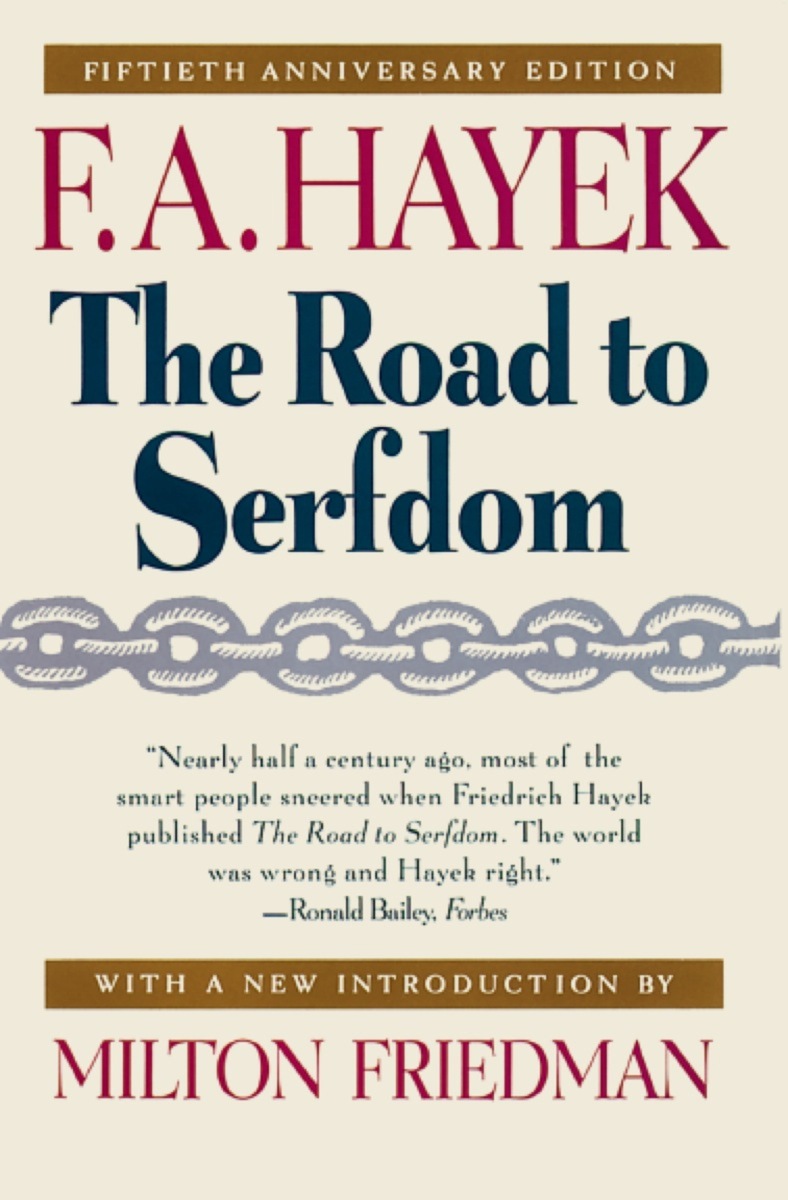
On the other hand, Hayek thought government interference in the economy was a threat to freedom. Hayek always rejected macroeconomics. He rejected any government intervention during the Great Depression itself. He feared that Keynes's brave new world was a big step in the wrong direction. In 1944 he published The Road to Serfdom that is about Hayek's ideas of freedom and competitive enterprise and opposition to any state's planning and controls in the economy. (There is also a (free downloable) condensed version of it appeared in the Reader’s Digest April 1945 edition, an illustrated version of it is also included at that book.) His ideas were at that time shunned by the academic world. Most of the university departments disliked him, and economists treated him as an outsider. No universities wanted to hire him, except the Chicago School.

Image from http://www.bibliovault.org/thumbs/978-0-226-32061-8-frontcover.jpg
He won the Nobel Prize for economics in 1974. Unlike Keynes, Hayek lived a very long life, and died in 1992 at the age of 92. (Look at the interesting numbers; 1992, at the age of 92.)


Look at how serious Hayek was, he did not smile, and was so thoughful. I don't like that class, it's too conservative; the class had only two women (perhaps just one woman).
Image from http://thinkmarkets.files.wordpress.com/2011/05/hayek1.jpg
(I will talk about them later; these two are so brilliants, two of the most important persons in the economics, and also the most important persons who influence my intellectual life. There are too much to talk about these two monsters; we can write series of books about them.)

Myo
(17 June 2011, Friday. 6:31 p.m.)
Note: I haven't written any posts these days, because I have been too busy with my study. This one is an old one that I have written long time ago. I am going to give references, to make it more academic and also include some photos of Keynes and Hayek, with a couple of their books. Both of them are so important for us.

Sunday, May 6, 2012

On Researchal Significancy


Have you ever got a thought, at least fortuitously, that one day findings from your research, which is boring, demanding, exacting that you have been doing for ages, all alone, through being broke so often, unnoticed and unimpressed by people around you perhaps those include your spouse or your girl-friend or boy-friend, even your parents, brothers or sisters, or your comrades, or your pastors or monks or boring Pope, or your government, your opposition, will, forever, for once and for all, change the way we understand about our lives or the nature, or improve our living standards exponentially or the way our government perform its task that actually serve our interest, or provide the better ways to treat or cure the diseases? (I know, I know, my sentence is too long. But remember Keynes’ General Theory is also badly organised and difficult to read. In fact, according to one of his greatest admirers, Paul Samuelson, who was also an author of very famous economic text book, Keynes' General Theory is "badly written, poorly organised .... it is arrogant, bad-tempered, polemical and not overly generous in its acknowledgements. It abounds in mare's nests and confusions". However, he continues, "in short, it is a work of genius" (cited in Moggridge, 1992, cited again in Strathern, 2002: 281. I am going to write a lot of posts on Keynes.).

Image from Barnes & Noble,

Trust me, never, ever, forever underestimate the significant of your research that you love dearly, you are so passionate about, you live with it, sleep with it, and have been giving up everything just for it.

It might not happen suddenly, but it will really have invaluable impact in one way or another as long as you believe in yourselves and in what you are researching correctly, professionally, diligently.
With that belief, single-mindedness, and gigantic crazy dream, with a little bit of arroganceness, I stick to my research and my writings, no matter what.

Let’s see one example to support my argument.

It was happened about 80 years ago: to be precise, it was on February 13, 1929.

The place was at St. Mary’s Hospital in London.

It was just a normal research paper reading at the Medical Research Club.

The paper was read by (oh!, no, I will not tell the name of the researcher, but I will do it later.)

The audience at the club was apathetic. No one showed any enthusiasm for the paper.  As Leedy and Ormrod (2001: 43) rightly observe, “great research has frequently been presented to those who are imaginatively both blind and deaf.” (Now, I understand why research grant organizations are not so keen about my research. They are just imaginatively blind and deaf. All of them will be greatly regretful for being uninterested to grant research grants for my research project.)

Although his colleague and audience at the club were indifferent, unimpressed, and apathetic, he knew the value of what he had done, what he had found from his research.  He knew how significant his research outcome really is.

It was actually one of the greatest moments in 20th-century medical research (Leedy & Ormrod, 2001: 43).

Fifteen years later from that day the researcher read his paper to imaginatively blind and deaf audience, he was awarded the Nobel Prize in medicine, together with two other researchers. It was in 1945.

His name is Alexander Fleming, or Dr Alexander Fleming, or Sir Alexander Fleming.

Fleming (centre) receiving the Nobel prize from King Gustaf V of Sweden (right) in 1945.
Image from the Wikimedia Commons http://en.wikipedia.org/wiki/File:Nobelpristagare_Fleming_Midi.jpg

The paper he read at the club was about his research on penicillin. It was in fact presentation of one of the most significant research reports of the early 20th century.


Fleming was named by Time magazine, in 1999, as one of the 100 Most Important People of the 20th Century for his discovery of penicillin, by stating that “it was a discovery that would change the course of history. … the most efficacious life-saving drug in the world, penicillin would alter forever the treatment of bacterial infections” (Time, 29 March 1999).

The procedures of great research (Nobel research, in my term) are exactly the same as those of what we, students, follow in doing our dissertation, thesis, research report. “All research begins with a problem, an observation, a question. Curiosity is the germinal seed.
     Hypotheses are formulated.
     Data are gathered.
     Conclusions are reached” (Leedy & Ormrod, 2001: 44).

(I did try to paraphrase, but the original composition is so beautiful and so perfect. So I gave up. It’s better to quote directly, faithfully :-)


(I am going to tell about Charles Goodyear soon, who lived his whole life, and gave up everything just for a single purpose.)


References

Moggridge, D. (1992) Maynard Keynes: An Economist’s Biography. London: Routledge. According to Strathern (2002), it is the best single-volume biography of Keynes’ life, times and ideas.
Leedy, P. D. and Ormrod, J. E. (2001) Practical Research: Planning and Design (7th Ed). Upper Saddle River (New Jersey): Merrill Prentice Hall.
Strathern, P. (2002) Dr Strangelove’s Game: A Brief History of Economic Genius. London: Penguin.

Note: The previous title was given as “Significance of Research”, but I felt that it was so boring and then tried to be creative and got that new title; it sounds like so Latin. I am also so pleased with my coincency: I again got that new term deriving from ‘coin’.

Friday, May 4, 2012

Harold Dwight Lasswell

 
Harold Dwight Lasswell (1902-1978)

Various intellectual methodological approaches such as interviewing techniques, content analysis, para-experimental techniques, and statistical measurement were originated, developed and applied by Lasswell long before these methodologies become standards, and famous across a variety of intellectual traditions that all of us, students and researchers are taken for granted.

Harold Dwight Lasswell is seen by many as the father of policy sciences. He was a prolific author, and authored over 30 books and 250 articles. "He was the most original and productive political scientist of his time" (Almond, 1987: 249).

Marvlck (1980: 219) states that “throughout the half century of his career, Harold D. Lasswell remained an intellectual iconoclast.” In a biographical memorial written by Gabriel Almond at the time of Lasswell's death (1978), Lasswell "ranked among the half dozen creative innovators in the social sciences in the twentieth century." (Almond, 1987: 249).

It was Lasswell who coined the term “the policy sciences,” (Farr, Hacker & Kazee, 2006: 1) now this phrase is all over the world of academic and research. In his book, Politics: Who Gets What, When, How, Lasswell (1938) states that politics is the resolution of conflict over “who gets what, when, how?”

Image from Amazon 
http://www.amazon.com/gp/product/images/1258035707/ref=dp_image_text_0/177-4538592-9248563?ie=UTF8&n=283155&s=books

According to Lasswell (1942), the liberal, democratic state did not succeed in harmonizing professed ideal and effective policy, partly because in the policy process, the democratic elements in the ideal were left undeveloped. Some shortcomings of liberal, democratic states have been failures of policy and intelligence. The paper stresses the important and critical role of intelligence (which has been neglected) in the policy process and analysis.

Marvlck (1980: 229) beautifully states that “Lasswell's approach was substantive; his concerns were humane; his influence has been cumulative. In his lifetime, he did a great deal. He did it all in a style that was inimitable and memorable”.

Lasswell (1971: 3) affirmed of his intellectual credo as follow:
Surely the qualified scientist is a participant observer of events who tries to see things as they are. He demands of himself, and of anyone who purports to be a scientist, that he suppresses no relevant fact and that he holds all explanations tentatively, and therefore open to revision if more adequate explanations are proposed . . . . Anyone worthy of the name of scientist must be able to struggle with considerable success against jealousy, envy, bigotry, and any other attitude that interferes with clarity of perception and judgment.


According to Encyclopedia of World Biography (2004), there is no biographical study of Lasswell. Perhaps one of us should do it.

(There are many things to talk about Lasswell, I will continue it later. I have to do other things :-))


References

Almond, G. A. (1987) Harold Dwight Lasswell (1902-1978):  A Biographical Memoir. Washington D.C.: National Academy of Sciences. Retrieved May 4, 2012, from http://books.nap.edu/html/biomems/hlasswell.pdf
Encyclopedia of World Biography (2004), Harold Dwight Lasswell. Retrieved May 04, 2012 from http://www.encyclopedia.com/doc/1G2-3404703735.html
Farr, J. S., Hacker, J. S. & Kazee, N. (2006) The Policy Scientist of Democracy: The Discipline of Harold D. Lasswell. In American Political Science Review, Vol. 100, No. 4 November. 2006. Retrieved May 4, 2012, from http://www2.lse.ac.uk/CPNSS/events/Abstracts/HIstoryofPoswarScience/Farr%20et%20al%20final%20proof.pdf
Lasswell, H. D. (1938) Politics: Who Gets What, When, How. New York: McGraw-Hill.
Lasswell, H. D. (1942) The Relation of Ideological Intelligence to Public Policy. In Ethics, Vol. 53, No. 1, Oct., 1942. pp. 25-34. Retrieved March 10, 2012, from http://www.jstor.org/stable/2988844.
Lasswell, Harold D. (1971). A Pre-View of the Policy Sciences. New York: American Elsevier.
Marvlck, D. (1980) The Work of Harold D. Lasswell: His Approach, Concerns, and Influence. In Political Behavior. Vol. 2, No. 3, 1980. New York: Agathon Press (pp. 219-229). Retrieved May 4, 2012, from www.springerlink.com/index/x0424l58h207167m.pdf